


Key Takeaways
- Emotional projection shapes pet–owner dynamics
- Attachment patterns influence caregiving intensity
- Unconscious compensation drives symbolic parenting
- Pets can activate archetypal parent roles
- The dynamic is adaptive but psychologically complex
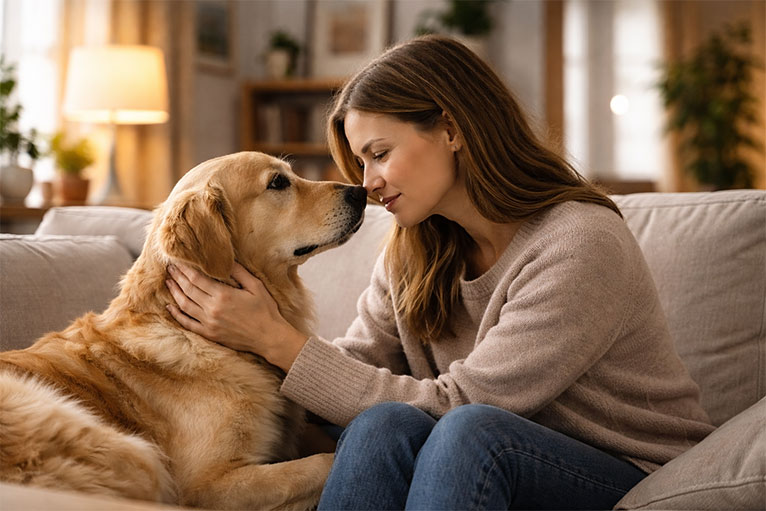
In contemporary society, many adults relate to their pets as if they were children. They speak to them in parental tones, organize their lives around their needs, and experience deep emotional bonds that resemble family attachment. From a clinical perspective, this behavior is not superficial or irrational. Rather, it reflects meaningful psychological processes rooted in attachment, symbolism, and the unconscious. Through the theoretical framework of Carl Jung, this phenomenon reveals important insights into modern emotional life.
Importantly, this dynamic does not imply pathology by default. Instead, it often represents an adaptive response to emotional realities, relational histories, and unmet psychological needs.
The Emotional Meaning of Pets in Adult Life
Pets as Attachment Figures
From an attachment-based perspective, pets often function as secure bases. They offer predictable affection, nonjudgmental presence, and emotional availability. Consequently, for individuals with histories of relational inconsistency or loss, animals can feel safer than human relationships.
Moreover, pets do not challenge identity, autonomy, or emotional boundaries in the way intimate human bonds do. As a result, attachment to pets can feel stable and emotionally efficient.
The Role of Safety and Control
In contrast to human relationships, caregiving toward pets allows for a high degree of control. The pet’s dependence reinforces the caregiver’s sense of competence and emotional relevance. Therefore, treating a pet as a child can stabilize self-worth, especially during periods of loneliness or transition.
A Jungian Interpretation of the Phenomenon
Projection and the Unconscious
From a Jungian standpoint, projection is central. Individuals may unconsciously project unmet nurturing instincts, abandoned aspects of the self, or unresolved parental archetypes onto their pets. In this context, the animal becomes a symbolic container for emotions that lack a conscious relational outlet.
This process is not deliberate. Rather, it emerges from the psyche’s attempt to restore balance.
The Parent Archetype
Additionally, Jung described archetypes as universal patterns of experience. The parent archetype, in particular, carries themes of protection, devotion, and responsibility. When adult life does not provide an avenue to express this archetype, it may find expression through animal caregiving.
Therefore, parenting a pet can serve as a symbolic enactment of this archetypal energy.
Want support that’s tailored to your situation?
If this feels familiar and you want support, you can contact Dr. Gustavo Benejam at (305) 981-6434 or (561) 376-9699 Prefer texting? WhatsApp: (561) 376-9699.
Compensation and Emotional Regulation
Psychological Compensation
Jung emphasized compensation as a mechanism through which the psyche corrects imbalance. For individuals experiencing emotional deprivation, isolation, or grief, intense caregiving toward a pet can compensate for unmet relational needs.
Importantly, this compensation often stabilizes mood and reduces anxiety. As a result, it can be psychologically protective.
Emotional Regulation Through Routine
Caring for a pet-child structure introduces routine, meaning, and emotional rhythm. Feeding, walking, and nurturing provide daily anchors. Consequently, these behaviors can regulate affect and reduce existential distress.

When the Dynamic Becomes Rigid
Healthy Versus Constraining Bonds
While this dynamic is often adaptive, rigidity can signal difficulty. For example, when the pet relationship replaces all human intimacy, emotional growth may stall. In contrast, flexible bonds coexist with human relationships and allow symbolic meaning without dependency.
Therefore, the clinical distinction lies not in the behavior itself, but in its psychological flexibility.
Clinical Indicators of Imbalance
Signs of imbalance may include intense anxiety around separation, anthropomorphizing that overrides realistic care, or avoidance of adult relational challenges. In these cases, the pet-child dynamic may warrant therapeutic exploration.
The Cultural Context
Modern Isolation and Symbolic Family
In contemporary culture, delayed parenthood, migration, and fragmented communities are common. Consequently, pets often become symbolic family members. This trend reflects broader social conditions rather than individual pathology.
From this perspective, treating pets as children mirrors cultural shifts in how connection and meaning are constructed.

Therapeutic Implications
Clinical Exploration, Not Judgment
In therapy, this pattern should be explored with curiosity. Clinicians can examine what the pet represents emotionally, what needs are being met, and which parts of the self are expressed through caregiving.
Importantly, the goal is integration, not removal of the bond.
Integration of Symbolic Meaning
When the symbolic role of the pet is consciously integrated, individuals often gain greater emotional freedom. As a result, caregiving becomes a source of enrichment rather than compensation.
FAQ
Is treating a pet like a child unhealthy?
Not inherently. It depends on flexibility and emotional balance.
Why do some people feel deeper bonds with pets than people?
Pets offer consistent, nonjudgmental attachment that can feel safer.
Does Jungian psychology view this as pathology?
No. Jung viewed it as symbolic compensation, not illness.
Can this behavior indicate unresolved emotional needs?
Yes, especially when it replaces human intimacy entirely.
Should therapy aim to change this behavior?
Therapy focuses on understanding its meaning, not eliminating it.
FINAL CLOSING
Treating pets as children is a psychologically rich phenomenon. When viewed through a Jungian lens, it reveals how the psyche seeks balance, connection, and expression of archetypal needs. Rather than dismissing this bond, understanding its symbolic role allows for deeper self-awareness and emotional integration.
If you’d like professional guidance, contact Dr. Gustavo Benejam’s offices at (305) 981-6434 or (561) 376-9699 Prefer texting? WhatsApp: (561) 376-9699.
If you are in crisis
If you’re in the U.S. and in crisis or thinking about self-harm, call or text 988 for immediate support.
Disclaimer: This article is for educational purposes only and does not provide medical advice, diagnosis, or treatment. If you have urgent safety concerns, call 911. If you’re in the U.S. and in crisis or thinking about self-harm, call or text 988.
Understanding Emotional Bonds
Deep emotional attachment to pets often reflects unconscious psychological processes. Exploring these patterns can bring clarity, balance, and healthier emotional integration.
Contact Dr. Benejam’s offices at (305) 981-6434 or (561) 376-9699 to get help.