


Key Takeaways
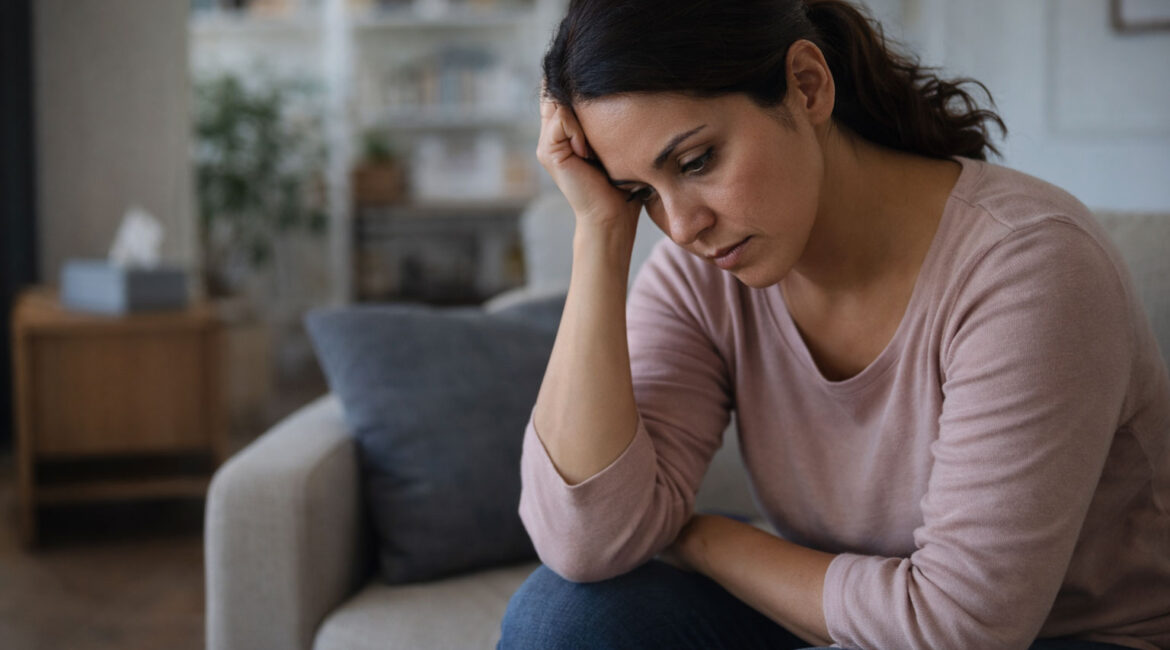
- VAWA survivors may internalize blame even when they did not cause the abuse.
- Battery or extreme cruelty can include serious nonphysical abuse.
- Delayed disclosure and ambivalence are common in trauma survivors.
- Psychological evaluations help connect abuse history to symptoms and functional impairment.
- Shame, fear, and repeated blame-shifting can distort how survivors describe their own experiences.
Why VAWA Survivors May Blame Themselves
Many survivors seeking protection under VAWA do not describe abuse in a direct or fully self-protective way.
They may soften the facts, defend the abusive partner, question their own reactions, or focus more on what they “did wrong” than on what was done to them.
From a clinical standpoint, that pattern is common. It often reflects the effects of prolonged abuse rather than evidence that the survivor caused it.
USCIS allows certain abused spouses, children, and parents of U.S. citizens or lawful permanent residents to self-petition when they meet the statutory requirements, including battery or extreme cruelty.
A psychological evaluation can be especially useful in these cases because it does more than repeat allegations. It explains how abuse shaped the survivor’s emotional functioning, self-concept, and ability to disclose what happened.
Public health guidance also recognizes that abuse and trauma are associated with anxiety, depression, posttraumatic symptoms, shame, and difficulty functioning.
A Public Turning Point in 2017
Survivors were not first harmed in 2017, and they were not first doubted in 2017 either.
However, 2017 marked a major shift in public conversation. As #MeToo became more visible, delayed disclosure, survivor shame, fear of disbelief, and the social costs of speaking up entered mainstream discussion in a way that had not happened at the same scale before.
The #MeToo movement own survivor materials reflect this focus on belief, safety, listening, and the reality that survivors often carry shame even before they disclose.
That shift matters in VAWA work because immigrant survivors often face the same misunderstandings, plus additional layers of dependency and fear.
People may ask why the survivor stayed, why the story emerged gradually, or why the survivor still sounds conflicted. Those questions are common.
They are not proof that the abuse was minor or invented.
Battery or Extreme Cruelty Is Broader Than Physical Assault
A narrow view of abuse can distort both legal and clinical analysis. VAWA does not turn only on severe visible injury.
USCIS evaluates cases under the framework of battery or extreme cruelty, and the Policy Manual addresses both the eligibility standard and the evidence used to establish it.
That distinction is important because many survivors report sustained humiliation, intimidation, isolation, financial control, threats, surveillance, sexual coercion, or immigration-related manipulation rather than repeated physical assault alone.
Federal women’s health guidance states that emotional and verbal abuse includes efforts to scare, isolate, or control a person and that its effects can be as serious as physical abuse. It also states plainly that abuse is never the victim’s fault.
Why Survivors Begin to Blame Themselves
Self-blame usually develops inside the abusive relationship. It often begins as an effort to prevent escalation.
The survivor tries to speak more carefully, avoid conflict, anticipate the other person’s moods, or change behavior to reduce danger.
Over time, this can turn into a deeper belief that the abuse happened because the survivor asked too many questions, set limits, reacted emotionally, or failed to keep the peace.
Clinically, that belief can function like a survival strategy. It may feel safer to think, “If I do everything right, maybe this will stop,” than to fully confront the reality that the other person is willing to cause harm.
What looks like responsibility may actually be adaptation to fear. This is one reason abuse survivors may sound insightful and self-doubting at the same time.
Want support that’s tailored to your situation?
If this feels familiar and you want support, you can contact Dr. Gustavo Benejam at (305) 981-6434 or (561) 376-9699 Prefer texting? WhatsApp: (561) 376-9699.
What Happens When the Survivor Speaks Up
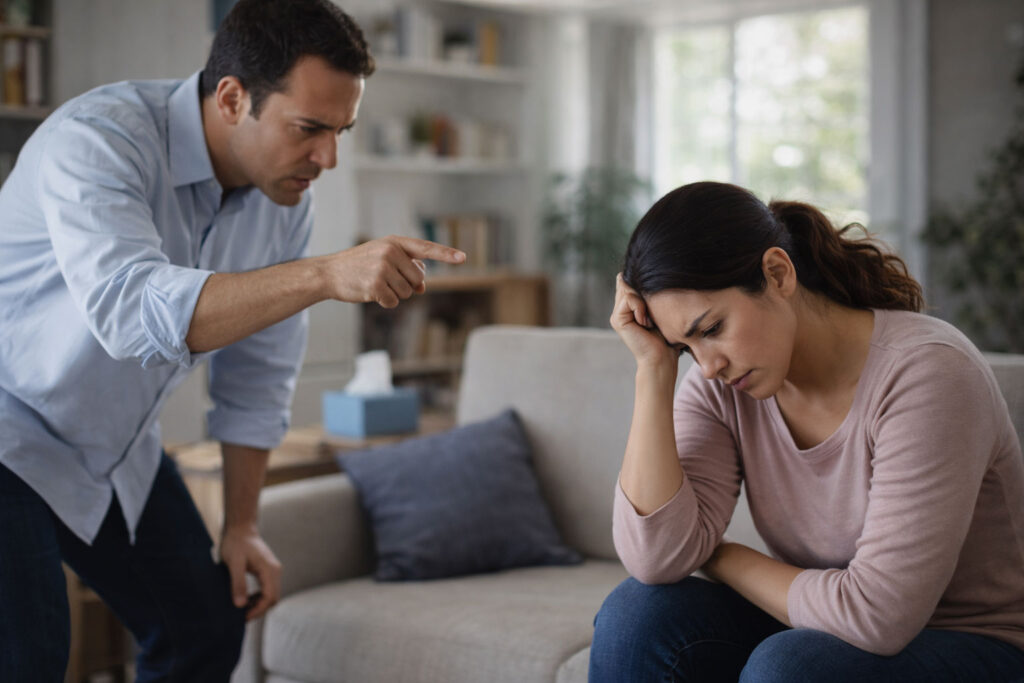
In many abusive relationships, the harm does not end with the abusive conduct itself. It often intensifies when the survivor attempts to describe what happened or object to it.
At that point, the abusive partner may deny the conduct, shift responsibility onto the survivor, attack the survivor’s credibility, or recast the interaction in a way that portrays the abusive partner as the injured party.
These dynamics are clinically significant because they can increase shame, confusion, and internalized blame, while also making it easier for others to misinterpret the survivor’s presentation and the nature of the abuse.
In a professional formulation, this can be stated clearly and without exaggeration:

Why This Matters in VAWA Psychological Evaluations
A good VAWA psychological evaluation should explain the abuse pattern, symptom development, and functional impact. It should also clarify why the survivor may describe the abuse with hesitation, guilt, or minimization.
That context can be essential when the survivor has internalized the abusive partner’s narrative and now speaks about the relationship in a way that sounds more self-critical than self-protective.
This is not a minor issue. Trauma can affect memory, sequencing, emotional regulation, and disclosure. A survivor may remember fear more clearly than chronology.
A survivor may omit details at first and disclose more later. A survivor may still feel bonded to the abusive partner. None of that automatically weakens the case. It may help explain how the abuse operated.
Immigration-Related Fear Can Intensify the Pattern
Immigration-related dependency can deepen both abuse and silence.
Some survivors are threatened with withdrawal of papers, abandonment, loss of financial support, separation from children, or contact with immigration authorities.
Others are isolated by language barriers, transportation limits, lack of income, or fear of seeking help.
USCIS has long recognized that immigrants can be especially vulnerable to domestic violence and related abuse because of these dependency factors.
That context is clinically relevant. It helps explain why a survivor stayed, delayed disclosure, recanted, or continued trying to preserve the relationship despite serious harm.
Educational Checklist / Clinical Interview Aid / Trauma-Informed Pattern Screen
Trauma-Informed Pattern Screen for VAWA Psychological Evaluations
This screening aid is designed to support a structured clinical interview in VAWA-related cases. It is educational, not diagnostic, and it does not replace individualized judgment. Its purpose is to help identify patterns commonly seen in survivors of battery, extreme cruelty, coercive control, intimidation, and abuse-related self-doubt.
Relationship and dependency context
The interview should first establish the relationship structure. The evaluator should identify the survivor’s relationship to the abusive person, the level of financial or emotional dependency, and whether the abusive person controlled housing, transportation, money, communication, or documents. Immigration-related fear should also be explored, especially when threats about status, sponsorship, or deportation were used to maintain control.
Abuse pattern mapping
The interview should assess patterns rather than isolated incidents. Relevant areas include physical violence, threats, intimidation, humiliation, sexual coercion, social isolation, surveillance, and financial control. Emotional and verbal abuse should be documented carefully because those forms of abuse can produce serious psychological harm even when physical injuries are limited or absent.
Denial, victim-blaming, retaliatory attacks, and reversal
The evaluator should ask what happened when the survivor objected, resisted, or tried to discuss the abuse. Did the abusive person deny events, shift blame, accuse the survivor of being the problem, or portray themselves as the injured party. These patterns can help explain why the survivor may appear uncertain, apologetic, or afraid to speak in a consistently self-protective way.
Internalized blame and trauma-linked meaning making
The evaluator should explore whether the survivor believes the abuse was their fault, whether they think they caused it by speaking up or reacting emotionally, and whether they feel ashamed for seeking help. Persistent guilt, minimization, and self-doubt may be part of the psychological injury rather than evidence of actual responsibility. The me too. movement’s survivor guidance also recognizes that survivors often shame themselves, even before disclosure.
Fear, adaptation, and constriction
Many survivors adapt by becoming hypervigilant, emotionally constricted, compliant, or socially withdrawn. The interviewer should assess whether the survivor learned to monitor tone, timing, or routine to avoid retaliation and whether fear persisted even when no acute incident was occurring. This often reveals how deeply the relationship shaped the survivor’s daily functioning.
Symptoms and functional impairment
The interview should connect the abuse history to clinical symptoms over time. Relevant areas include anxiety, depressed mood, panic symptoms, poor sleep, nightmares, intrusive memories, avoidance, concentration problems, and changes in work, parenting, or social functioning. Abuse-related impairment often extends far beyond the relationship itself.
Disclosure barriers and credibility context
The evaluator should assess why the survivor may have delayed disclosure, partially disclosed, or sounded inconsistent. Fear of retaliation, shame, dependency, and trauma-related memory difficulties can all shape how the survivor tells the story. The broader shift in public conversation after 2017 made these realities more visible, but they remain widely misunderstood in individual cases.
What a Strong Clinical Formulation Can Say
When supported by the interview, records, and mental status findings, the evaluation may explain that the survivor’s minimization, ambivalence, and self-criticism are clinically consistent with trauma-related adaptation to prolonged abuse and coercive control. That kind of formulation helps separate actual responsibility from abuse-shaped perception.
A useful sentence may read as follows:
“The reported relational dynamics are consistent with patterns commonly described in the clinical literature as denial, victim-blaming, retaliatory attacks, and reversal of victim-offender roles.
These dynamics may help explain the survivor’s self-doubt, minimization of abuse severity, shame, and difficulty describing the abusive relationship in a consistently self-protective manner.”
Clinical Relevance in Psychological Practice
FAQ
Why do some VAWA survivors blame themselves?
Because fear, coercive control, shame, and repeated blame-shifting can lead survivors to internalize responsibility for abuse they did not cause.
Can a VAWA case be strong without severe physical violence?
Yes. USCIS evaluates VAWA claims under the framework of battery or extreme cruelty, and serious nonphysical abuse may still be highly relevant.
Why might a survivor sound inconsistent during an evaluation?
Trauma can affect memory, emotional regulation, sequencing, and disclosure. Fear of retaliation or disbelief can also shape how the story is told.
Why mention 2017 and #MeToo in a VAWA article?
Because that period made delayed disclosure, survivor shame, and fear of disbelief more visible in public discussion, which helps readers understand why abuse survivors do not always present in a neat or immediate way.
What should a VAWA psychological evaluation explain?
It should explain the abuse pattern, symptom development, functional impairment, disclosure barriers, and the survivor’s trauma-shaped self-perception.
FINAL CLOSING
In many VAWA cases, the deepest injury is not only the abusive conduct. It is the gradual erosion of the survivor’s trust in their own judgment, memory, and emotional reality. That is why internalized blame must be understood carefully.
It often reflects impact, not responsibility.
A well-prepared psychological evaluation helps restore clarity by showing how abuse, fear, shame, and repeated blame-shifting shaped the survivor’s psychological functioning.
Authoritative external links
Disclaimer: This article is for educational purposes only and does not provide medical advice, diagnosis, or treatment. If you have urgent safety concerns, call 911. If you’re in the U.S. and in crisis or thinking about self-harm, call or text 988.
Clarify the Impact
A trauma-informed VAWA psychological evaluation can help explain how abuse, coercive control, fear, and internalized blame affected emotional functioning. Clear clinical documentation can make the survivor’s experience easier to understand in a careful and professional way.
Contact Dr. Benejam’s offices at (305) 981-6434 or (561) 376-9699 to get help.