Psychological Evaluation
for Asylum
Form I-589
You left your country out of fear. Telling that story to an officer or a judge isn’t easy, and trauma sometimes makes memories come back out of order. Our report explains why, with clinical judgment.

Trauma also changes
the way we remember
Threats, persecution, prison, violence against your family. Someone who lived through that may be unsure of dates, forget details or go blank while telling their story. It isn’t lying: it’s a known reaction to trauma.
A psychological evaluation documents the harm persecution left on you and explains, when it applies, why your account may have gaps or inconsistencies.
It can also support your attorney if they need to explain why you didn’t file within the first year.
What you need to know about the I-589 evaluation
What is it?
A clinical interview with standardized tests. The result is a report signed by a Licensed Clinical Psychologist documenting the impact of persecution on your mental health. It also documents how it affects your daily life: work, sleep, parenting and relationships.
Who needs it?
People applying for asylum, withholding of removal or protection under the Convention Against Torture, before USCIS or the immigration court.
Why does it help?
It gives clinical context to your testimony and supports the fear you feel about returning to your country.
How long does it take?
About 7 days after the interview. If your case is urgent, choose Express delivery (48 to 72 hours) or 24-Hour Rush delivery.

"You don't have to tell your story perfectly. You just have to tell it the way it happened. We take care of the rest."Dr. Gustavo R. Benejam, Psy.D.

What your asylum evaluation documents
Each section answers what the officer or judge needs to see in an asylum case. The report doesn’t exaggerate or promise an outcome: it describes precisely what the evaluation found.
- IYour personal history and what you lived through in your country
- IIPersecution, threats and traumatic events
- IIIStandardized psychological tests (trauma, anxiety, depression)
- IVDiagnostic impression and effects on memory and testimony
- VClinical conclusions signed by Dr. Benejam
How it works
Book
Online, by phone or by text. We confirm the exact date and time.
Interview
In your language, at your own pace.
Signed report
For you and your attorney.
Dr. Benejam explains the asylum evaluation
In a few minutes: what the asylum evaluation is for, what the interview is like and what your attorney receives.

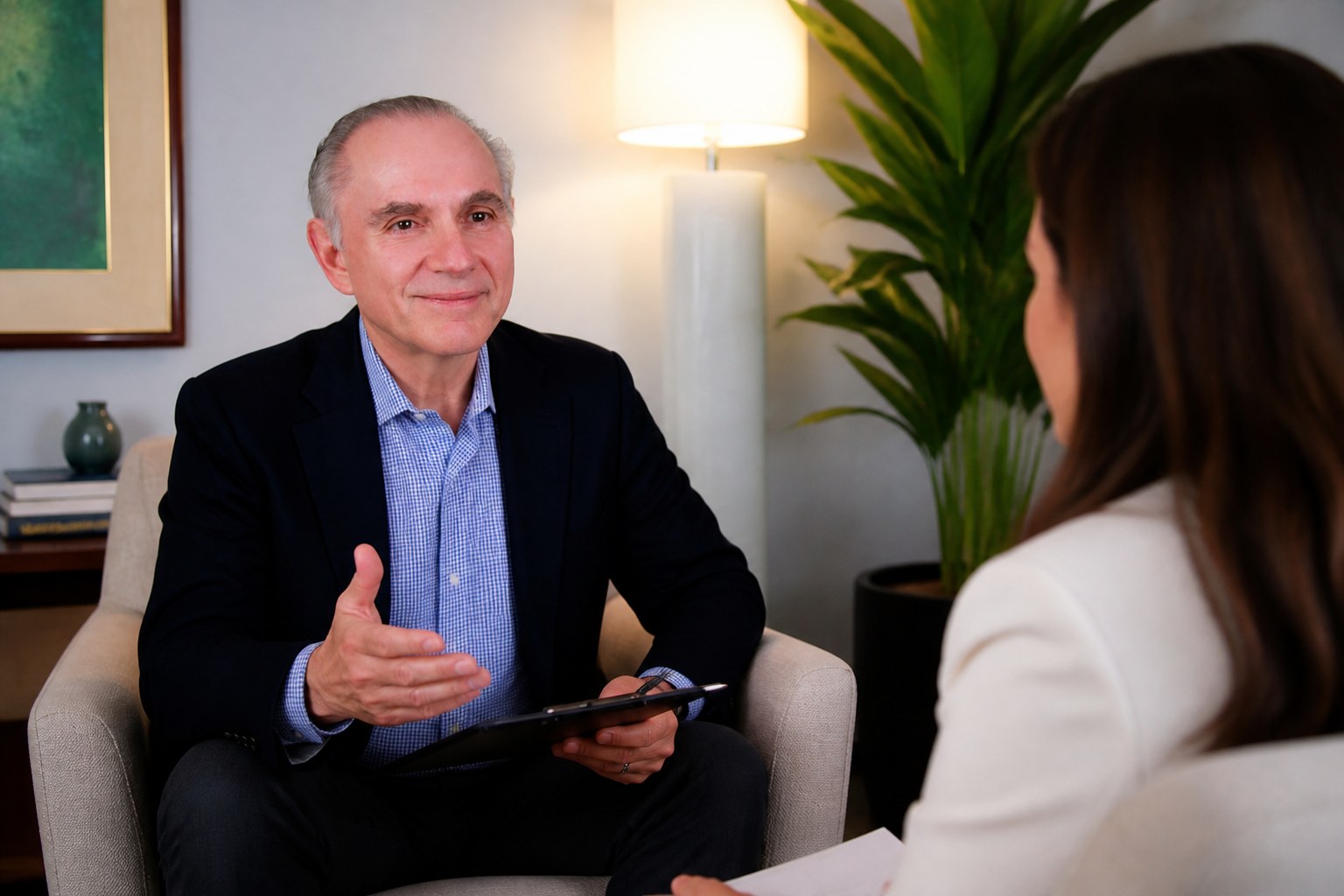
A Licensed Clinical Psychologist
signs your report
Your evaluation is led by Dr. Gustavo R. Benejam, a Licensed Clinical Psychologist, together with his clinical team. He reviews and signs every report.
Frequently asked questions
about the asylum evaluation
Can’t find your question? Text us at (305) 981-6434.
Does it help if the one-year deadline has passed?
It can help. If a mental health condition kept you from filing on time, the evaluation can document it. Your attorney decides how to use it.
Do I have to tell everything that happened to me?
You'll share what the evaluation needs, at your own pace. You can take breaks whenever you need.
Can the report be used in immigration court?
Yes. The report is prepared to be filed with USCIS or the immigration judge, depending on your case.
What if I don't speak English, Spanish or Portuguese?
We conduct the evaluation in those three languages. For any other language, you must bring your own interpreter.
Does my health insurance cover it?
No. Health insurance, Medicaid and Medicare do not cover psychological evaluations for immigration purposes.
Can I do it by video if I don't live in Florida?
In almost every state, yes, thanks to Dr. Benejam's PSYPACT authorization. Check the state map or text us.
Does the evaluation guarantee approval?
No. No evaluation guarantees an outcome. What it does is document your case with clinical rigor so it is considered in full.
Take the first step today
We reply during office hours. Your call or message is confidential.
Miami, FL 33129 · (305) 981-6434
Boca Raton, FL 33433 · (561) 376-9699
Licensed Clinical Psychologist